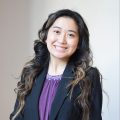
South Minneapolis resident Aliya Rahman can’t leave her house without being reminded of what happened on Jan. 13 when several federal agents broke into her vehicle and dragged her out during Operation Metro Surge.
“This is not an event that changed my world view, but it definitely changed my day-to-day interaction with this world,” she told Sahan Journal Monday.
Rahman’s arrest went viral after multiple bystanders posted videos of the incident showing several federal agents surrounding her vehicle on Park Avenue near East 34th Street in south Minneapolis. They swore at her, cut her seatbelt and pulled her out of the vehicle as she yelled that she was disabled, according to the videos and a lawsuit she’s filing against the federal government.
Rahman, 44, filed a tort claim in April, which allows individuals to sue the U.S. government in federal court for personal injury, death and property damage. She filed a civil lawsuit in federal court Tuesday after the U.S. government did not respond to her tort claim within six months.
Rahman continues to suffer mental and physical pain from her arrest, the lawsuit says. She was on the way to a doctor’s appointment at the time, and was caught in a traffic jam while federal agents were conducting arrests nearby.
She alleges assault, battery, false imprisonment and negligence against the federal government, and is seeking an unspecified amount of damages.
“It’s very clear that my story is really common, even though the attention it got might be uncommon,” she said. “It’s very clear that we don’t have a thick enough line around what somebody who calls themselves law enforcement is allowed to do to another person in this country. So for me, that’s one of the points of the lawsuit. We always have to keep thickening those lines to establish what is okay to do to anyone.”
“This is a federal lawsuit, but I think that it’s important to do these things for the cultural impact they can have all the way up and down the criminal justice system.”
Rahman said she has visited her doctor more regularly because of injuries she suffered in the arrest. She continues to deal with double vision and reduced peripheral vision, according to her lawsuit. She also suffers from pain in her neck, shoulders and head.
Another major change in her life is that strangers often approach her and share their thoughts about what happened to her, or, share deeply personal stories about Operation Metro Surge. Her presence sometimes triggers traumatic memories for people, she said, and some respond with vulgar language.
These conversations initially felt disorienting, she said, adding that she now tries to make people who share vulnerable stories feel respected and “whole” by listening to their stories.
Rahman has had trouble sleeping since her arrest, and often sees the faces of other people who were detained with her at the Bishop Henry Whipple Federal Building, which houses immigration court and local U.S. Immigration and Customs Enforcement offices.
“I wake up every morning hoping that beyond pushing ICE officers off of our street to the extent we did – they’re not all gone – that we actually uproot the reasons they were here in the first place,” she said. “I think that’s the only thing that would feel like healing to me.”
Rahman was born in northwestern Wisconsin, and spent most of her childhood in Bangladesh. She moved back to the United States in 1999 when she was 17 to attend Purdue University in Indiana.
Rahman chose to continue living in south Minneapolis despite seeing constant reminders of her arrest. Her close-knit neighborhood feels similar to the small town she lived in in rural Wisconsin, and the community that raised her in Bangladesh. Her family taught her the value of hard work, — her mother worked in a grain elevator and her stepfather was a railroad worker — to build infrastructure for stable communities.
Rahman said she was a block away from an immigration enforcement operation that had caused a traffic jam when she was detained. Federal agents shouted conflicting orders at her, telling her to “move” or “get out,” according to her lawsuit. Videos went viral of her arrest, where she is seen loudly yelling that she is disabled.
The Department of Homeland Security called Rahman an “agitator” at the time and accused her of obstructing ICE agents conducting arrests in the area.
Rahman was never criminally charged in the incident.
“My body is different. The injuries are unresolved. I’m at the doctor a lot. And what happened on January 13th, it didn’t stop that day, right?,” Rahman said. “These folks engaged in a disinformation campaign as well, which has also transformed what it’s like to interact with the public.”
Rahman, said she has autism, and was recovering from a traumatic brain injury at the time of her arrest.

“Ms. Rahman remains deeply distressed and traumatized that her own government, after assaulting and falsely arresting her, continues to make statements through its official social media channels and to the press that identify her, use threatening language about her, and spread lies,” says her lawsuit.
According to the lawsuit: Federal agents transported her to the Bishop Henry Whipple Federal Building. Rahman grew increasingly more sick in her cell, and after several attempts to notify federal agents of her condition, she eventually passed out.
Rahman was transported to a hospital a few hours later, where she was treated for a concussion and injuries “consistent with assault.” She was released from the hospital and allowed to go home.
“There isn’t a reason to think that’s not going to happen again to me or to somebody I love,” she said of her motivation for the lawsuit.
Rahman was also arrested and injured while attending President Donald Trump’s State of the Union address in February as a guest of Democratic U.S. Rep. Ilhan Omar. She was standing silently in the gallery when she was arrested. Capitol police said at the time that she refused orders to sit down, and was taken into custody for unlawful conduct. She was released, and never faced charges.