In 2023, St. Cloud Area Schools launched Minnesota’s first Somali dual-language immersion program. At the time, it was heralded as an important step for students’ cultural connection and brain development. The program planned to focus initially on kindergarteners, and then expand year by year.
But this school year, the district stopped offering that dual-language option. One of the reasons, according to district spokeswoman Tamara Deland: “challenges in obtaining appropriate curriculum.”
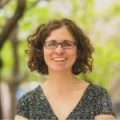
A new Somali language first-grade curriculum aims to address that challenge. Saida Hassan, an alumna of the Harvard Graduate School of Education, is founder of the global education company Hindis (the Somali word for innovation), which developed the curriculum. Hassan, who grew up in St. Paul and now splits her time between Minnesota and Somalia, aims to serve the Somali diaspora worldwide. She aligned the curriculum with Minnesota language arts standards so it can be adopted in classrooms throughout the state.
“I’m hoping that this becomes something that is embedded in the education system here,” she said. “We will produce more confident, more academically rich children who are bilingual.”
She recalled feeling insecure as a child when she didn’t see her identity reflected in the schooling system. If she’d had the chance to learn Somali academically as a kid, she said, “I think my confidence would have been better.”
Deqa Muhidin, a Bush Fellow who previously coordinated the Somali heritage language program and designed curriculum at Minneapolis Public Schools, said she had not reviewed the Hindis curriculum but praised Hassan’s efforts as a “great starting ground.”
“I’ve been screaming from the rooftops that we need this,” she said.
Though some Minnesota schools already offer Somali language instruction, teachers and districts often have to design their own curriculum, a time-consuming process that can prove an impediment to sustaining a program, as St. Cloud Area Schools found.
Abdirashid Warsame, executive director of Twin Cities International Schools, encountered that problem, too. Warsame said his Minneapolis charter school offered a Somali language course for nearly 15 years, with a curriculum that a teacher had created from scratch. When that teacher left, the school didn’t have the right instructor to continue teaching Somali, he said.
But with Hindis’ new curriculum, which includes a teacher’s guide, he hopes that the school will be able to offer Somali language instruction again in the near future.
“It’s not different than teaching science now,” he said.
Muhidin said that when teachers have to design their own curriculum, it takes time and focus away from actual teaching. If they have a curriculum, “they get to use their thought processes for more creative ways of teaching and making it more student-centered.”
Hassan hopes to continue the project, creating curriculum books for second- through fifth-graders. But it would be expensive. She self-financed the first-grade curriculum, paying teams of writers, illustrators and external readers a total of about $40,000. She’s applying for grants to work on the next installment.
“It requires massive time. It requires a lot of research. It requires a lot of coordination,” she said. “I don’t think I can do the next one without getting it financed.”
For now, the first-grade curriculum is attracting interest from parents — and schools. Hassan has so far printed 300 books; 70% are already distributed.
Hindis’ curriculum planning has also attracted interest outside Minnesota. The company is now at work developing a third-grade literacy curriculum for Highline Public Schools in the Seattle area.
Adina Thea, director of multilingual learning for Highline Public Schools, said her district hopes to implement the third-grade curriculum next year — aligned to Common Core standards and tying in to other third-grade educational themes for her district, like marine life. Until now, her district has cobbled together Somali literacy and science curriculum for kindergarten through second grade.
“I don’t think there’s any work like this that’s been done,” she said.
Ibrahim Hussein, a language and culture teacher at East African Elementary Magnet School in St. Paul Public Schools, started using the Hindis first-grade curriculum as a resource for his students this school year.
Hussein teaches both Somali and Arabic to all elementary students — meaning he teaches two languages at three grouped grade levels, usually creating the curriculum himself. So it’s been a help for him to rely on this book to teach his first- and second-graders.
“It makes the teacher’s job very easy because it already has the plans and the units,” he said. “If we could have books like this for all grades, that would be perfect.”

He appreciates how the book relies on Minnesota language arts standards, which helps the kids make connections between how they learn English language concepts and how they learn Somali. For example, he said, the curriculum for both subjects teaches them how to start a sentence with a capital letter, and the difference between a word and a sentence.
Curriculum alone may not solve all the challenges of introducing Somali language classes to schools. Deland, the St. Cloud Area Schools spokeswoman, said another factor in discontinuing the program was “low parental interest.” Despite the new availability of the Hindis curriculum, she said, the district was not currently in the process of adopting a first-grade Somali curriculum.
Many parents, especially those who are newer to the country, want to make sure their children are learning English, and worry that focusing on Somali language could detract from that goal, Hassan said.
“They have a fear of being accused that you’re not assimilating with all that’s going on right now,” she said, referring to President Donald Trump’s recent attacks on the Somali community. “But I think that it creates more confidence, stronger identities for kids and being part of this society.”
She added that better parent outreach could help — and noted that a language immersion program might have more success in the Twin Cities.
Over the last few months, since Trump called Somali people “garbage,” Hassan said she’d noticed her own nieces and nephews denying their Somali heritage — instead pointing to the fact that they were born in Sweden.
Seeing Somali heritage honored in schools can help these students academically and psychologically, despite the president’s rhetoric, she said — and it can help students from other backgrounds learn about Somali heritage, too. Hassan noted that she took Spanish and French in high school, and also enjoyed learning about the Hmong community.
Teaching languages that represent different populations in school helps affirm “this is part of our community,” Hassan said.
RELATED STORIES
Farhiya Iman, a social worker who grew up in St. Cloud and is now raising her own children there, recalls being told when she was a child to go back to her country. She taught herself to read and write Somali as a teenager by texting with friends. Though people outside her community were telling her she didn’t belong, connecting to her own culture and language helped her feel more of a sense of belonging. But because she didn’t learn it in a formal setting, she still second-guesses her spelling — and her ability to correctly pass down the language to her children.
Her oldest child learned to speak Somali when the family lived in Somalia for a year. But her middle child often insists “I don’t speak Somalia” when Iman tries to use the language with him.
But she’s had some success in introducing the language to him at home with the Hindis curriculum.
“It’s very similar to how they’re used to being taught,” she said. “There’s a lot of pictures, a lot of small words.” She showed him a page with pictures of animals, and told him that the word for camel in Somali is geel. When she came back to the camel picture later, he remembered the correct word.
“He’s picking up on it, which is surprisingly amazing,” she said.
Hassan hopes that her curriculum is the beginning of a movement, and that others are able to build new educational resources too.
“I don’t want to be the only one,” she said. “I want a lot of people to go into this and be able to build that system. My whole thing is, approach educational systems and see gaps they’re missing for my community, and fill that in. And this is one of them.”
After launching the curriculum in December, Hassan has spent the past few months in Somalia with her husband. A Swedish citizen who works in Somalia, he hasn’t been able to get a visa to visit the United States since Trump was reelected.
As Operation Metro Surge unfolded in Minnesota, Hassan put her curriculum promotion efforts on pause to support her mother’s Lake Street Restaurant, Mama Safia’s Kitchen — which burned down in 2020, rebuilt, and is now facing labor shortages and fewer customers in the wake of the ICE surge. From Mogadishu, Hassan has fielded food orders and threatening phone calls while managing the online platforms for her mother’s restaurant.
The events of the past few months have made her even more passionate about strengthening her community through education.
“It made me really highly motivated about using my skills to create a bigger bridge,” she said. “I can be a Minnesotan, and at the same time I can be a Somali.”