When a group of Metro Transit Police and Community Service officers boarded a eastbound Green Line train at Raymond Avenue station Tuesday morning, they gave riders a warning.
Anyone who hadn’t paid the fare could get off to avoid a $35 citation ticket. About seven riders left, one of whom returned after tapping his transit card on the payment reader.
“It’s gonna be like that from now on,” a Metro Transit police officer told the man.
Metro Transit is embarking on a campaign this month to collect fares and clean up its light-rail service. In the years since COVID-19 caused light-rail ridership to plummet, the agency did very little fare enforcement on Blue and Green line trains, issuing just 49 fare evasion tickets in 2022. Antisocial behavior like smoking and hard drug use became commonplace.
In the first week of the enforcement crackdown, police and community service officers have issued 170 citations as of Friday afternoon, according to a Metro Transit spokesperson.
The pandemic lowered transit ridership and led to an exodus of bus and train operators that resulted in service reductions from 2019 levels. But the agency has been boosting frequency over the past year, and seen a subsequent rise in ridership. Average weekday ridership neared 134,0000 systemwide in September, up 15 percent from 2022 and the highest figure since early 2020.
The agency wants those new riders to stick around.
“Our goal is to make it safe and comfortable for all riders,” said Metro Transit Chief Operating Officer Brian Funk.
Making transit attractive is key to meeting the state’s climate goals. Transportation is the leading source of greenhouse gas emissions in Minnesota, according to a 2023 state report.
Cracking down
Metro Transit’s fare collection program seeks to increase revenues and is part of a broader strategy to improve safety on light-rail lines.
The agency is using a combination of its police force and community service officers, who are typically young, aspiring law enforcement officers with less authority. The agency also began supplemental partnerships last year with security firms who work at certain stations.
The agency is also starting to partner with community organizations to help people seek addiction, employment, and housing resources. That program, known as The Transit Service Intervention Project, uses groups of social workers in blue vests.
The Minnesota Legislature passed a Transit Rider Investment Program this spring that allowed officials who aren’t uniformed police officers to issue the citations, which are no longer a criminal misdemeanor. The fines start at $35 and can rise to $100 and 120-day ban from transit service for four violations. The fine can be reduced by buying future fares or watching an informational video. People issued citations can also appeal them via an in-person or virtual hearing, according to Metro Transit.
On a southbound Blue Line train Wednesday afternoon, a man walked from one end of the carriage to the other, complaining of people who were smoking on board. He sat down behind Angela Maxwell, a healthcare worker from Jamaica, who said she doesn’t like seeing or smelling cigarettes or drugs on the train. It ruins the air for everyone, she said. Maxwell said she uses the light-rail a few times a month. She likes riding the train to save money and gas, and hopes the system will improve.
“I think I would ride it more,” she said.
Public transportation often is a window into societal problems, Funk said. The agency’s responsibility is to make sure customers feel safe and comfortable using the system.
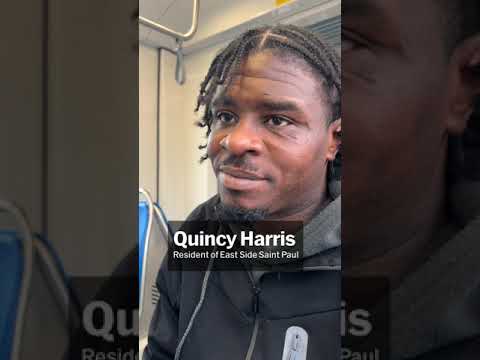
“I think they should be harsher on people getting high and smoking,” Green Line rider Quincy Harris said. “But as far as putting people off the trains, sometimes this is the only option they have.”
The enforcement is focusing on light-rail service, but will also include bus rapid transit routes where riders pay before boarding.
Boosting service
The increase in enforcement began as Metro Transit launched its quarterly service changes on December 2, which saw relatively few frequency improvements, but marks a year of no service reductions and a 10 percent increase in service on bus and light-routes from this time last year.
Many of the service reductions on light-rail and bus routes from 2020 to 2022 came from depleted staffing numbers. Hiring is on the rise in 2023 due to an aggressive recruiting campaign that leaned on increased pay and benefits that included paying for new employees to earn their commercial drivers license and allowing new applicants to go directly into train operator training instead of starting on buses.
Today, Metro Transit has more than 1,100 bus drivers, an improvement from less than 1000 in 2022. There’s room for more, with a budget for up to 1,250 drivers. The agency employs 94 train operators today, with six more in training.
The quarterly service changes largely stem from easing detours caused during construction season. But Metro Transit increased frequency on one of its most used lines, Route 21, and expanded its footprint to match the future B Line bus rapid transit that will largely replace the service in 2025. The 21, which connects downtown St. Paul to south Minneapolis via Selby and Marshall avenues and Lake Street, is operating faster and more frequently. Buses now will run every six-to-nine minutes along Lake Street as opposed to every 15 minutes, and will expand down to France Avenue on the border with St. Louis Park. The 21 can also take advantage of future B Line infrastructure on Lake Street including larger shelters at stops and dedicated bus lanes near the Mississippi River.
RELATED STORIES
Local suburban routes in Brooklyn Park and Brooklyn Center, the 723 and 724, are also getting frequency boosts.
Bus rapid transit and local route service are at 89 percent of 2019 levels. New bus rapid transit routes like the Orange and D Lines are becoming increasingly popular. The D Line, which connects Brooklyn Center to the Mall of America through Minneapolis, has been in service for a year and is nearing the four million ride mark, according to Funk.
“That’s going gangbusters,” he said.
Light-rail lags further behind in ridership at 67 percent of 2019 levels, and trains continue to run every 15 minutes. The agency hopes to improve light rail frequency to 12 or 10 minute intervals by June 2024, Funk said.
“I want more frequent service,” Funk said. “I don’t want to look at the schedule when I catch the train at the end of the day.”
Sahan Journal visual journalist Dymanh Chhoun contributed to this article.
This story was updated December 8 at 3:30 p.m.to include new data on citation numbers.