
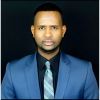

For four years, Mahad Ali Hussein reported from the Somali region of Ethiopia, one of the most dangerous countries in the world for journalists.
After multiple arrests and beatings by police, he fled the country in 2023.
For the last year, he’s been podcasting from Minnesota, part of an ecosystem of Somali journalists who cover the Somali diaspora, telling stories that would be suppressed back home.
Several of those journalists, including Mahad, are worried about their future following Donald Trump’s election to a second term. Trump has threatened mass deportations, and U.S. asylum claims have a yearslong backlog.
Robin Carr, an immigration attorney based in Minneapolis, represents at least two Somali journalists with pending asylum cases.
During Trump’s first term, “a lot of my Somali clients were terrified, as they are now,” she said. There were rumors of raids with Immigration and Customs Enforcement (ICE) sweeping up asylum seekers. Deportation flights to Somalia also resumed.
“My clients, even those with pending cases who should have been safe, abandoned their cases and fled to Canada,” she said. Between 30 and 40 of her clients left, she said. Many never returned.
A thriving local ecosystem
Minnesota is home to nearly 40 Somali journalists working across 11 news outlets, including digital, radio, and social media platforms. Among these, Xogmaal Media and Somali American TV have the largest audiences.
Such news outlets play a vital role in connecting the local community with political developments in Somalia and neighboring countries. Somali-speaking politicians — local figures and those campaigning for seats in Somalia, Ethiopia, and Kenya — often launch their campaigns in Minnesota.
“Minnesota is the Iowa of Somalia and the Somali-speaking regions in Ethiopia and Kenya,” said Mohamud Hassan, a local politician and community activist. “Most politicians start their campaign and fundraising events here to gain support.”
Many Somali journalists in Minnesota fled their home country due to safety concerns and challenging working conditions, said Ahmednor Farah, who previously worked for Radio Mogadishu, Shabelle and Barkulan.
Somalia, Ethiopia, and Djibouti are among the most dangerous countries for journalists. “The leaders in those countries are mostly dictators, and journalists do not receive adequate education and training for their work,” he said.
The presence of al-Shabab and other terrorist groups exacerbate the situation in Somalia, Ahmednor said.
From journalist to Uber driver
As a member of a minority clan in Somalia, journalist Yasin Mohamud faced both threats to his safety and stonewalling from government officials and groups like al-Shabab.
In 2012, he witnessed the murder of fellow reporter Hassan Yusuf Absuge in a 24-hour spree that left four journalists dead. Yasin, who worked for Radio Banadir and Radio Kulmiye, was also shot and wounded in those attacks.
After more than a decade as a journalist in Mogadishu, he finally fled, arriving in Minnesota in 2022. He is now married with an infant son. Since the election, Yasin said he has struggled to sleep at night and checks on his son constantly.
He currently works with Somali American TV in Minneapolis and drives for Uber to support his family. Although he has a work permit and a pending asylum claim, he worries that he will be at risk of deportation under the new administration.
Carr, who represents Yasin, says the immigration court at Fort Snelling currently has a backlog of 30,000 cases. Those with pending claims should be safe from deportation while they wait for a hearing, she said.
But she said the hardline rhetoric coming from Trump’s team is stoking a “climate of fear.”
Uncertain future
Mahad began working as a journalist in Ethiopia’s Somali region in 2019, the same year the country was plunged into an Internet blackout, following a failed coup.
His work with the Somali Regional Media Association and Horyaal24 TV shed light on corruption and social issues, but it came at a cost.
In December 2022, he was arrested while on assignment. “After refusing to delete an article exposing worker exploitation, I was taken by intelligence officers, beaten, and held in a cold, dark room,” he said. His equipment was destroyed, and he was transferred to a city jail.
Posts about his disappearance trended on Facebook and Instagram, leading to public outcry. “Thanks to social media, I was eventually freed,” he said.
He was arrested again in January 2023, the same month authorities in Ethiopia’s Somali region suspended and revoked the licenses of 15 foreign independent media outlets including BBC Somalia.
Mahad fled a month later and arrived in Minnesota in March 2023, hoping to rebuild his life. Even as he launched a podcast to highlight the stories of marginalized communities, he received threatening phone calls, texts and comments on social media.
The night of Trump’s election, Mahad watched as state after state turned red on the electoral map. He knew his asylum case could take years to get a hearing.
The next morning, he told his 22,000 Facebook followers that he was selling his podcasting equipment, in case he is sent back to Ethiopia.
“I came here to be safe, but now I’m being told to leave,” he said in an interview. “What kind of justice is that?”


