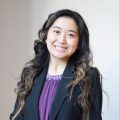
Fifty years after she fled Laos as a child, Pam Thao still remembers the percussion of bombs exploding, the shock of a man dropping dead before her, the warmth of blood on her feet as she ran home to her village through the dark.
Every year on the Fourth of July, the pop of firecrackers brings back those harrowing moments.
Thao is among the thousands of Hmong who arrived in the United States as refugees in the 1970s following the “Secret War,” a CIA-back military operation to prevent the spread of communism from North Vietnam to neighboring Laos.
Today, 95,000 Hmong live in Minnesota and 55,000 in Wisconsin, according to U.S. Census data. California is another major hub with 110,000 Hmong. What began as a trickle of refugees scattered across the Midwest has become, in Minnesota, the largest urban concentration of Hmong people in the U.S.
Since arriving a half-century ago, the community has established businesses, raised families, started nonprofits and schools, elected political leaders and celebrated its first Olympic Gold medalist.
But the path to that stability and success wasn’t easy.
Some Hmong Minnesotans say their first time in the United States felt like stepping out of a time machine. Their homes in Laos had no electricity, running water or carpeted floors. In many families, Hmong boys were allowed to go to school, while girls were expected to stay at home to cook and clean.
“I had to learn quickly and transform to a different woman,” said Houa Moua, 73, who arrived in Eau Claire, Wisconsin, in 1976. In Laos, Moua didn’t attend school, but she took English language classes after she arrived in the U.S. as a young adult.
“The best part is we feel free from the communists chasing us, and we do not have to pack our pack every day and be ready to move day or night,” Moua said of her first years after arriving in the U.S. “We feel free from guns, bombs and shooting.”
Moua and her family were among the first Hmong refugees to resettle in Eau Claire. At the time, she was 24, married and pregnant with her second child. She came with her husband, two brothers-in-law and her 2-year-old son.
“Our worst struggle we had was to struggle to survive,” she said. “One, learning the second language. Two, finding work. And three, find a way to live and go along the culture and society of America.”

The first wave of Hmong refugees
The first wave of Hmong refugees arrived in the United States in 1975. They escaped political persecution by the communist government in Laos, starvation if they fled to the mountains or the jungle, and poor living conditions when they made it to crowded refugee camps in Thailand. But as newcomers to the U.S., they also faced challenges, including poverty, discrimination and a language barrier.
During the resettlement process, Hmong families were scattered in several states to create less “burden and visibility” since they were involved in the Secret War, said Lee Pao Xiong, director of the Center for Hmong Studies at Concordia University in St. Paul.
The covert CIA-backed military operation in Laos was tied to the Vietnam War, which was widely unpopular in the United States at the time, he said.
However, many families sought to reunite and come to live in Minnesota because of social service programs started by the Hmong Association of Minnesota, currently known as the Lao Family Community of Minnesota, and the Hmong Women’s Association.
Some Hmong immigrants who originally resettled in other states say they moved to Minnesota because of job training opportunities, the quality of education and home affordability.
Thao, who resettled in Chicago, Illinois, in 1976, said she wanted to move to Minnesota after visiting her parents and realizing that she could get her high school diploma from attending night classes at Central High School in St. Paul. At the time, she already had two children and a husband back in Chicago.
“So that’s when I told my husband that we need to move to Minnesota,” she said. She got married at a young age and started a family, so she was unable to finish high school. But night classes offered her a chance to pull her family out of poverty, she said.

‘We had to fight’
Xang Vang, 75, was one of the Hmong the CIA enlisted in its fight against the communist North Vietnamese and the Pathet Lao in the 1960s and early 1970s.
“During the war, our life in Laos, when you have duty, you have to stay focused on your daily activities,” he said. “We had very little time to rest — unlike life in America in this day.”
Gaoly Yang, co-founder of Hmong Women’s Association, said she was a young girl studying at a boarding school in Laos, but she had several uncles and brothers fighting in the war.
“For me and many Hmong people, all we knew was that the North Vietnamese were invading our villages and we had to fight,” said Yang, 68, who lives in Maplewood. “And Americans were providing supplies for us to fight.”
Many Hmong still alive today were recruited as teenagers by General Vang Pao, commander of the Secret Army, a CIA-backed and trained force.
Vang said he was 17 or 18 when he joined Vang Pao’s army. He was promoted by the general to oversee an ammunition depot in Long Tieng, Laos, a Hmong military base.
“During that period when we were a military, the superiors did not let us know about the politics that we’re going to lose the war,” Vang said. “We were still on duty.”
Rumors started to spread in villages of the U.S. pulling out. U.S. doctors and officers at the military base began leaving their posts. Then suddenly, Vang said he realized, like many others, the danger of staying in Laos when three U.S. aircraft landed in the Long Tieng military base to fly out Hmong families to Thailand.
“We raced one another getting to the aircraft… in that moment we couldn’t eat, we couldn’t drink. You feel very sad because everybody run for their life and you have to do the same thing, you know?” he said. “So when you get into Thailand, then you notice yourself that you lost the country.”
The Pathet Lao took power in Laos after the fall of Saigon.

General Vang Pao visiting soldiers in Thailand who were trained with equipment by the Thai military to secure Thailand’s borders. Credit: Courtesy of Center for Hmong Studies 
A photo of Long Tieng, Laos, which operated as the headquarters of General Vang Pao and United States CIA. Credit: Mac Thompson Collection | Center for Hmong Studies 
Pathet Lao patrolling the Mekong River. Credit: Courtesy of Center for Hmong Studies 
A morning market in Ban Vinai Refugee Camp. Credit: Courtesy of Center for Hmong Studies 
Refugee gardening in Ban Vinai Refugee camp in order to supplement their United Nations food rations. Credit: Courtesy of Center for Hmong Studies 
Refugees lining up to fill their bucket with water from the United Nations sponsored well. Credit: Courtesy of Center for Hmong Studies 
Refugees learning about modern kitchen equipment before coming to America. Credit: Courtesy of Center for Hmong Studies 
Refugees arriving in the United States with their International Organization for Migration (IOM) bag. Credit: Courtesy of Center for Hmong Studies 
A photo of Hmong people rushing to board one of three U.S. aircrafts evacuating them from Long Tieng, Laos, in May 1975. Credit: Moua Blong | Center for Hmong Studies
Fleeing Laos
About 2,500 people were airlifted out over a three-day period from May 12 to 14. Many of the remaining Hmong traveled by taxi or bus to Vientiane, the capital of Laos, before crossing the Mekong River into Thailand. Many others also went on foot through the jungle to reach the border.
An estimated one-fourth of all Hmong men and boys died fighting the Communist Pathet Lao and North Vietnamese Army, according to the Minnesota Historical Society.
Long Hang, owner of Thai Garden restaurant on University Avenue, said he was shot in the back by communist soldiers while trying to flee through the jungles of Laos to Thailand.
“I was just praying to make it because there’s no medical treatment,” he said. He and his mother made it to a refugee camp, where they lived there for about a year before reuniting with his brother who already resettled in Texas.
The families that evacuated out of Long Tieng stayed in a makeshift refugee camp called Nam Phong, a former U.S. Marines training facility. For the first nine months, the U.S. Agency for International Development had not set up a food system yet and General Vang Pao used the last funds from the CIA to provide food for the refugee families.
“We have receipts of all that,” said Lee Pao Xiong.

The Thai government eventually opened another camp, Nong Khai, to house the growing number of Hmong and Lao refugees. At its peak, 36,583 people lived at Nong Khai in 1978, according to Hmongstory Legacy, a Fresno, California-based historical preservation project.
Some Hmong immigrants say they remember unsanitary conditions, overcrowding and starvation in the refugee camps. Many children died from contracting diseases, such as mumps and measles. Oftentimes, families were waiting to reunite with other relatives who got separated while fleeing Laos.
In their first couple of weeks living in Nong Khai, Pam Thao said her family went hungry because they didn’t have money to buy food. She remembers walking alongside her mother and younger sister to find food and relatives at the camp.
One day, she wandered into the marketplace alone, and asked a Thai woman for a handful of rice. The woman, Thao said, surprised her with an offer to give her family food in exchange for helping translate to Hmong customers. She said she easily learned how to speak Thai because she knew the Lao language, which is similar.
She helped the Thai woman sell her produce until her family left the camp in December 1976.
Houa Moua said many Hmong grew vegetables in the camps to make money and feed their families. She has been a gardener for most of her life.
‘Everybody is teaching everybody’
Many Hmong refugees were sponsored by churches who helped financially support and find housing and jobs for them after they arrived in the U.S. In those early years, they often worked physically demanding jobs with low wages. Some Hmong immigrants say they faced racism and prejudice.
Before leaving the refugee camp, Thao said her mother told her she knew their lives would change in the United States from observing Americans. Seeing the material of their clothes, shoes and the food, Thao said her mother got the impression that they lived much more affluent lives.
When Thao’s family resettled in Chicago, she saw that her mother was right. She no longer had to fetch water or wood to cook a meal. She felt a sense of wonder when she figured out how to ride an elevator down to the lobby in her apartment building.
“My mom told me all this, and you know when your mom tells you things, she never lies to you, right? I take this to heart,” she said. “When we land in Chicago, guess what? I jump 100 years into the future.”
Gaoly Yang said she came with her husband and some of his family, including brothers and their wives. Yang’s family was one of the first Hmong families to resettle in Minnesota.
“After we got here, of course there was no program or service or anything like that for refugees way back then,” she said. Without a car, they walked to the grocery store and cleaned a nearby church to make money.

Yang knew French from her years at a boarding school in Laos. She pushed herself to learn English and became one of the first Hmong interpreters working with Hmong patients, especially women and elders, at hospitals and other health care settings. Those experiences motivated her to establish the first Hmong women’s organization in Minnesota.
Yang served as executive director of the Women’s Association of Hmong and Lao, which provided everything from English literacy classes, to help for domestic violence survivors, to activities for elders. The association dissolved in 2002.
Xang Vang, one of the families evacuated to Thailand in May 1975, resettled in Loganville, Wisconsin. Vang said he remembers the first 10 months in Wisconsin was “very tough.” He found work in the laundry at a nursing home earning $2.09 per hour, but quit after three months. He said he couldn’t handle the smell of the dirty sheets.
During an interview for a new job, he felt insulted when the employer asked if he could count to 10. As a military officer, he handled reports and used a forklift to move ammunition from airplanes — he wanted to achieve more in life, he said.
Following his friend’s advice, he moved to Minnesota in 1977. He eventually landed an education assistant position with the St. Paul Public Schools. “It’s a lot better,” he said.
He joined the Hmong Association of Minnesota, later known as the Lao Family Community of Minnesota, as a board secretary. In its early years, the organization helped bring more Hmong to Minnesota from across the country, by hosting events like the annual Hmong Freedom Festival and offering resettlement and social services.
“Everybody is teaching everybody, you know,” he said. “The earlier arrivals teach the later arrivals in those years.”
The organization also worked with Gov. Al Quie to get funding to sponsor more Hmong refugees to resettle in Minnesota.
“We have successfully adapted from a peasant life to a very high-tech country and city, we’re being productive citizens over here,” Vang said. “I was very proud, I am very proud. I will be very proud when I die.”
The next 50 years
In the next 50 years, some Hmong immigrants say they want to see the younger generation preserve their culture, language, support one another and keep the community together. They also want to see a Hmong president or astronaut someday.
“The sky’s the only limit for our community,” said Toua Xiong, a business entrepreneur and owner of the Pan Asian Center at Maplewood Mall. “I am believing the way we’re driving today, the way we’re moving today, and the scale and the pace we’re moving today, 50 years from now we’ll be owning [publicly traded] companies.”

Some Hmong born in the United States say they still see challenges facing the community, including domestic violence, health disparities, homelessness and substance abuse.
“Even though we have been here 50 years, and have prospered in many ways, we are relatively still a new community here,” Seng Xiong, 30, said. “We’re still having community members struggle.”
Xiong grew up in Brooklyn Park, one of the Twin Cities neighborhoods with the highest concentrations of Hmong people. Xiong said the children and grandchildren of the immigrant generations are exposed less to the language, history and culture.
“There’s a lot of youth who are still trying to survive in this current day with again trying to assimilate — fit enough so that they don’t become targets of racism.”
Many younger Hmong Americans also want to see the community rethink traditional gender roles and become more inclusive to LGBTQ Hmong people.
“Queerness for Hmong people did not just start here,” Xiong said. “We have always been part of our history.”
Sophia Vuelo, the first state-appointed judge of Hmong descent, said she’s seen Hmong politicians and education “transform our community.” She expressed hope for the younger generations because of hardships and sacrifices from the first-generation families in the United States.
“Fifty years from now, I know for a fact that our Hmong American children will go out into the world and do even more spectacular things given the resources that we were able to give them and provide to them,” she said.