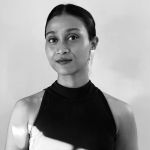

As a child, Sue Yang was told by her parents that her disability stemmed from a curse, or something wrong or bad she might have done. They had no direct experience of disability in their family and didn’t always know how to make her feel included in family and social events. So Yang had to educate herself about Turner syndrome, and advocate for herself both in her family and in the community. “They [were] hesitant, but they grew out of it because I taught them. I helped teach them that don’t be afraid, actually be more supportive,” Yang said of her parents.
“The stigma of [disability] is that we tend to not show our child with a disability, because of shame, afraid of being excluded, afraid of being judged,” Yang said.
“Many Ways of Being: Hmong Disability Stories in Photos,” aims to cut through the stigma and highlight stories of resilience, joy and advocacy.
The exhibit, created by the nonprofit United Hmong with Disabilities, highlights the stories of eight Hmong individuals of varying ages and with visible and invisible disabilities. It launched with a kickoff event in April at Hmong Village and is on display at the Walker Art Center for a second weekend on May 10.
“The idea of it is to showcase that all [people with] disabilities are just like ordinary people,” said Yang, who is the board president of the organization and a participant in the exhibit.
Sahan Journal interviewed three of the eight individuals featured in the exhibit to learn more about their stories:
Houa Moua, co-founder of United Hmong with Disabilities, comedian and actor
Houa Moua did not embrace her disability for the first two decades of her life. The co-founder of United Hmong with Disabilities, who is also a comedian and an actor, said she lived in denial. “I just wanted to be a Hmong daughter,” she said. “But because of my disability, I didn’t have to do all the things that women feel oppressed by. It is so weird because I guess I’m being further oppressed.”
Growing up, having to take special education classes in school didn’t help. “Being grouped with other kids with disabilities, it always made you feel othered,” Moua said. “A lot of the teaching for me were things that might have worked for white kids with disabilities. And it was to teach us how to sort of navigate America. But then I go home and I’m still just that girl in a wheelchair.”
That changed when she was in her early 20s; she learned more about her disability, made friends with people with disabilities, especially Hmong women.
Moua would go on to discover that she would need to constantly advocate for inclusion, both with her family and with strangers. “My disability meant I couldn’t participate in my family a lot, but they’re always insisting on doing things that they assure me I cannot do,” she said.
This perspective on disability is ingrained in the Hmong language, which often describes disabilities as a loss, Moua said. “The vocabulary around disability is all very negative. It all surrounds the idea of having lost something, not being able to do something. If you’re deaf, or if you’re someone who’s on the autism spectrum, they might call you the word for ‘dumb.’”

She also encountered accessibility barriers in the neighborhoods and community spaces she navigated. Moua recalled the time she went to get pho in Frogtown, got stuck in the snow in her wheelchair and had to call the fire department for help. Or, when she discovered all the food stalls at the annual Hmong International Freedom Festival in St. Paul were on the top of a hill with no wheelchair access. “The more POC there are in the neighborhood, the less accessible it seems,” she said. “It’s kind of hard to be a person of many intersections.”
Moua confronts the intersections of her identity every day, be it in the form of spaces she has access to, or how people often transgress her personal space to offer help she didn’t ask for. Like the time someone started pushing her wheelchair without her consent, scaring Moua. “I started screaming, and she backed off. And she just walked away, looking like literally the most horrified that [I’ve] ever seen a person be. And I’m like, “Oh, wow. Now I have to feel bad that she invaded my space!’”
Humor is one tool Moua uses to make sense of her lived experiences and debunk social notions around people with disabilities. “People expect you to be sad,” she said. “So many things happen to you and the darker it is, the more there’s always a funny side.”
On Saturday, the first day of the Walker exhibit, Moua performed her new comedy set, “Living Inspirationally,” where she joked about how people with disabilities are called inspirational simply for existing.
Moua said that the Hmong community in Minnesota has a long way to go to not only accept but also embrace people with disabilities. And the path towards that, Moua believes, is in radical change. “I feel like it’s at that point now where it’s not just small tweaks,” she said.
Blong Moua
For Blong Moua, living with spina bifida is “quite boring.” Moua instead wants to be active, independent, hold a job and participate in family activities. But he said he often feels left out.
On the day the exhibit kicked off at the Hmong Village with some of the participants, members of United Hmong with Disabilities and community members, Moua showed up alone, driven to the venue by a volunteer driver. He said he wished his family was there. “I don’t think they know that I’m even in this disability conference,” he said.

Moua, 46, is the oldest of three brothers, and yet, growing up, and even now, he feels like he is treated as the youngest in his family because of his disability. “It kind of makes me upset,” Moua said. He said even before he can attempt to do something by himself, someone rushes in to help and do it for him. “In real life, I think the oldest kid with disability, the parents are supposed to treat them as an adult, as what they need to be treated. But in my situation, they treat the able-bodied first and then me last.”
Moua has been attending a day support program for 22 years and had a job for a private digital imagining company before the pandemic. But, he said the opportunities for individuals with disabilities have shrunk since then. His dream is a job translating Hmong where he won’t have to move around much.
Asked what his ideal day would look like, Moua said, “if I were to do anything, I would try to be [as] independent as possible, not worry about what my parents are wanting me to do.”
Chue and Belle Xiong
“How do I translate Down syndrome to Hmong?” This was of the many questions Chue Xiong had to grapple with after she had her third child, Peyang Lee, aka Belle Lee. There was a lack of resources and information, and her family was nervous for her. “It was very, very challenging,” Xiong said. “I’m sure other Hmong people out there [who have] children with disability and who are even more scared than me, because I’m a health care worker, and I’m still like, ‘Oh my gosh, what happened? How do I process this? How do I go from here?’”
As a nurse, Xiong took it on herself to not only learn more about Down syndrome for her child, but also educate members of her family and the community at large. She knew it would be an uphill battle.
“I know people, especially our community, they will look down [on] family who had children with disabilities as being a burden or being disadvantaged. So I said, ‘Okay, now it’s up to me to advocate for her, to make the best of her life, because beside me, there’s nobody that will advocate for her.’”

At the health care facilities she has worked in, Xiong said she made sure to be there for Hmong mothers with children who have Down syndrome. She would be in the room with them after they gave birth, to support them and share her journey bringing up Peyang.
“When I see [a] family who had normal children or children without limitation and disability, I’m happy for them, but [when] I see family who had children or who had family member who had some kind of disability, it just touched my heart. I want to reach out to them. I want to tell them that I know how special your person is. I want to make that person feel good, and I want to say something positive to them,” Xiong said.
Peyang, 17, is the third of four children. She loves music and drawing. In school, she is lovingly called the Queen of Color Markers because she loves to draw and has every color with her. “She also wants to dress like mom, and she loves being photographed,” Xiong said.
She knows that many families tend to make their children with disabilities feel left out by not including them in their plans. But Xiong said that it is very important to her that Peyang is not only included in family and social events but also is welcomed and respected. “I include her all the time because I want to make sure that she’s never alone, or feels isolated,” she said. “I want [people] to have that level of respect that she is as normal as my other children.”
Peyang grew up around a doting mother and loving sisters who are her best friends and second moms. Xiong hopes Peyang will continue to live with them as long as she wants to, that she will grow up to be self-sufficient and be able to take care of herself, but more than anything, she wants Peyang to be happy. “I will make sure that she has a place to stay, where she’s happy, where she’s [loved].”
What: Sensory Friendly Sunday at the Walker
Time: Sunday, May 10, 8-11 a.m.
Location: 725 Vineland Place, Minneapolis
Details: instagram.com/p/DXKV6xqjIeo