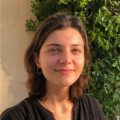
Growing up in Syria, Nour Khayou remembers giving fake names when her teachers were asking for her parents’ identity. From a very young age, she learned she should give no information on her family’s identity or politics to anyone, fearing Bashar al-Assad’s secret police.
When protests broke out in her hometown, Al Suwayda, last year, Khayou stayed away from the crowds, worried she would be arrested if she tried to leave and reenter the country.
“I’m so happy that people today are celebrating in the streets and are no longer scared of being imprisoned or detained,” said Khayou, 19, now a freshman in psychology and neuroscience at Macalester college. “They can freely express what they’re feeling and celebrate this victory.”
Early on Sunday, rebel groups in Syria took the capital Damascus and announced that Assad’s regime had fallen, after 53 years of brutal dictatorship. The Syrian community in Minnesota is celebrating from afar, but their happiness is weighted with fear of the atrocities that are yet to be discovered.
“I never imagined that 14 years of war would end in less than a week,” said Khayou. “[I thought] I would have grandkids by the time Assad would leave; he was preparing his son to take over after him.”
Since the rebel offensive started on November 27, Khayou was worried for her family and friends back in Syria as the regime was bombarding cities taken by the rebels. Power outages made it harder for her to keep contact with her family. And it was almost impossible for Khayou to keep up with work at school in the meantime.
Assad’s administration was overthrown in 10 days. The Assad family fled to Russia and was granted asylum according to Russian state news.
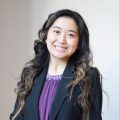
Nora Nashawaty spent most of Thanksgiving weekend with her family, watching the news coming from Syria on TV and her social media feed. Her hopes rose as she saw rebel groups take city after city. It reminded her of the beginning of the revolution in 2011 and gave her goosebumps.
“We never thought the regime would end in our lifetime,” Nashawaty, 32, said, whose father left Syria in the 1980s.
Nashawaty was born and raised in the U.S. and now lives in Chanhassen. The last time she was able to travel to Syria was in 2009. She was later put on a black list and could not enter the country, because of her activism supporting the Syrian revolution from the U.S.
Since the fall of the Assad regime, Nashawaty is often on the phone with her family in Syria and around the world. For the first time, she saw her cousins curse Assad on group chats, and she had an unfiltered conversation with her grandmother.
“I never imagined she would ever say anything political, I never imagined her expressing joy about [what’s] unfolding,” said Nashawaty. “We have a saying in Syria that the walls have ears, and it’s just about how much the security apparatus of the state was infiltrated into every aspect of people’s lives.”
At least 100,000 Syrians have disappeared under the Assad regime in the last decade and thousands have been imprisoned. Rebel groups broke through prisons to free tens of thousands of political prisoners from major cities like Damascus, Aleppo, Hama and Homs. Videos circulated on social media showing rebels opening prison doors, detainees walking free in the streets, and families being reunited.
St. Paul resident Yaroub Almahamid feels an intense mix of joy and also grief when he sees updates from Sednaya prison, where thousands were imprisoned and killed.
“If we think about it, remember it, anybody in Syria becomes crazy,” said Almahamid, 38. “Every family has somebody who is an immigrant, who is dead in the sea, who is in prison, or dead from the bombs.”
While groups tried to access the underground levels of Sednaya, where many detainees are believed to be held with very little oxygen, rebels found torture instruments and rooms used as mass grave.
“We Syrians know how bad it’s been but now we’re seeing the evidence,” said Nashawaty. “Video after video, after video, realizing how much torture and how much oppression our people have been facing.”
After watching videos coming out of the prisons during the weekend, Khayou woke up in the middle of the night on Monday having a nightmare, unable to breathe.
“I don’t think any Syrian can heal or be normal after what we’ve witnessed,” she said. She noted that most doctors, therapists and psychiatrists left Syria and the health care system is in crisis. She hopes to complete a graduate degree in clinical psychology and return to Syria as a doctor.
More than 6 million Syrians have fled the country since 2011. In Minnesota, 1,516 people are of Syrian descent and 108 refugees were resettled this year, twice as many as in 2022, according to the U.S. Department of State.
Almahamid left Syria in 2013 after being injured in a bombardement and arrived in Minnesota in 2021. He hopes to visit Syria soon, and show the country to his children, who were born in Jordan. But he is not planning to move back soon.
“I am still hesitant — last night Israel bombed Syria again,” Almahamid said on Monday. “That would be terrible for my children. I don’t need them to scream like the people in Syria; a lot of people are crazy from the bombs.”
Almahamid also noted that many people in Syria do not have work and are struggling to feed their families. Over 90% of the Syrian population lives under the poverty line.
Nashawaty also hopes to visit Syria soon for the first time in years.
“On the horizon I might be able to go back, I might be able to go see my family, I might be able to walk the streets I used to as a kid,” she said. “I just can’t comprehend it.”
This week has also been the occasion for the community to come together. There has not been a protest for Syria in a while in Minnesota. But on Sunday, when she attended the Human Rights Day rally organized by the Anti-War Committee in Minneapolis, Nashawaty saw Syrian refugees joining the crowd.
“And they’re just spreading their hope and their joy to the Palestinians,” said Nashawaty. “We didn’t think anything would get better, and look where we are. And we want this for you.”